DIGITAL PARADOX: From Cogito to Conscio, Reframing Human Orientation in the Age of Technological Acceleration
Luluk Sumiarso
Abstract
The rapid acceleration of digital technology has transformed human civilization by enabling unprecedented levels of connectivity, speed, and access to information. However, alongside these advancements, an emerging paradox has become increasingly evident: while informational capacity expands, the human ability to maintain orientation, clarity, and sound judgment appears to decline.
This paper conceptualizes this condition as the Digital Paradox (Digpar)—a systemic imbalance in which technological acceleration outpaces the human capacity to sustain internal orientation. Building upon this premise, the paper identifies the limitations of the Cartesian dualistic framework—Res Extensa and Res Cogitans—in explaining human behavior under conditions of digital overload.
To address this gap, a triadic architecture of the human system is proposed, consisting of the Physical Domain (R1), the Cognitive Domain (R2), and the Intrinsical Domain (R3). Within this framework, human action is understood as the outcome of an integrated process: Sentio → Cogito → Ago.
The paper introduces Conscio-Science (Konsiologi) as a conceptual field dedicated to the study of human self-navigation in complex environments. It argues that the primary challenge of the digital age is no longer informational scarcity, but the preservation of orientation within informational abundance.
1. Introduction: Acceleration without Orientation
Over the past decades, digital technology has significantly reshaped the structure of human interaction, communication, and decision-making. Instantaneous communication, large-scale data exchange, and automated systems have enhanced efficiency across multiple domains of life.
However, this transformation has also introduced a fundamental challenge. Despite increased access to knowledge, individuals appear increasingly susceptible to confusion, misinterpretation, and poor judgment. The coexistence of informational abundance and declining clarity represents a critical tension in contemporary society.
This condition raises a central question:
Why does increased technological sophistication coincide with a weakening of human orientation?
2. The Digital Paradox: A Systemic Condition
The Digital Paradox (Digpar) is defined as a condition in which the acceleration of external digital systems exceeds the capacity of the human system to maintain internal coherence and orientation.
Empirical observations suggest that exposure to digitally mediated environments often results in:
- heightened emotional reactivity,
- reduced deliberative thinking,
- and increased vulnerability to misinformation and manipulation.
Importantly, these effects are not inherent properties of technology itself, but consequences of the interaction between digital systems and human cognitive and affective processes.
3. Limitations of the Cartesian Framework
Modern scientific understanding of human nature has been largely shaped by the Cartesian dualistic paradigm:
- Res Extensa (the physical domain),
- Res Cogitans (the cognitive domain).
While this framework has been instrumental in advancing science and engineering, it reveals limitations when applied to the complexity of human behavior in the digital era.
Specifically, it does not adequately address:
- the formation of meaning and value,
- the establishment of direction and purpose,
- and the regulation of decision-making under conditions of informational overload and emotional influence.
As a result, when cognitive processes are overwhelmed, individuals may lose a stable center of orientation.
4. Re-Orientation of Thought: Toward a Triadic Architecture
Rather than rejecting the Cartesian foundation, this work proposes a conceptual extension referred to as the Re-Orientation of Cartesian Thinking.
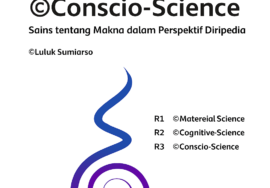
This approach introduces a triadic model of the human system consisting of:
- R1 – Physical Domain (action and manifestation),
- R2 – Cognitive Domain (thinking and reasoning),
- R3 – Intrinsical Domain (orientation, meaning, and decision-direction).
These domains function as an integrated and dynamically interacting system. Within this architecture, human behavior is not solely the product of cognition, but is fundamentally shaped by intrinsic orientation.
5. Human System Dynamics in the Digital Environment
Within the triadic framework, the Digital Paradox can be understood as a disruption in the alignment between R1, R2, and R3.
In digitally mediated environments:
- stimuli often directly activate the intrinsical domain (R3), particularly through emotional triggers,
- these responses influence cognitive processing (R2),
- which in turn drive physical actions (R1).
Without sufficient awareness and internal regulation, this process can lead to rapid, unreflective decision-making and increased susceptibility to manipulation.
6. From Cogito to Conscio: The Primacy of Orientation
A central contribution of this work is the conceptual shift from Cogito (thinking) to Conscio (intrinsic awareness and orientation).
This shift emphasizes that human direction does not originate from cognition alone, but from a deeper layer of intrinsic orientation, referred to here as the Intrinsical Domain (R3).
This relationship is captured in the formulation:
Sentio, ergo cogito, ergo ago
(I sense/feel → I think → I act)
This sequence reflects a reordering of human processes, positioning intrinsic orientation as the foundational driver of both thought and action.
7. The Emergence of Conscio-Science (Konsiologi)
To systematize this perspective, the paper introduces Conscio-Science (Konsiologi)—defined as the science of self-navigation.
Conscio-Science seeks to:
- examine how individuals maintain orientation in complex environments,
- analyze the interactions between R1, R2, and R3,
- and develop frameworks that enhance human capacity for self-directed navigation.
Within this field, humans are understood not merely as information-processing entities, but as systems capable of directing themselves in dynamic and uncertain contexts.
8. Empirical Illustration: Digital Reality Construction
The theoretical framework is complemented by a real-world case study involving a prominent Indonesian public intellectual, presented with explicit consent.
The case demonstrates how digitally constructed narratives, when disseminated widely, can shape public perception even in the absence of factual grounding.
This example highlights the systemic nature of the Digital Paradox and underscores the importance of internal orientation in interpreting digital reality.
9. Conclusion: Reclaiming Human Orientation
This work does not seek to critique technological advancement, but to deepen the understanding of how humans engage with it.
In the digital age, the primary challenge is no longer access to information, but the ability to maintain orientation within its abundance.
The Digital Paradox thus represents not merely a technological issue, but a call for a fundamental reorientation in how human systems are understood.
Such reorientation enables individuals not only to move faster, but to move with clarity, coherence, and purpose.
Closing Statement
“Technological advancement without clear orientation does not take humanity further;
it only accelerates movement without direction”- Luluk Sumiarso
Jakarta, March 19, 2026, Capistrano Day
_______________
©DIGITAL PARADOX — From Cogito to Conscio (Sentio, ergo cogito, ergo ago). All rights reserved. Registered with the Directorate General of Intellectual Property (DGIP), Republic of Indonesia, No. EC002026025548 (11 February 2026).